Glossmeter QPI-GM360 & QPI-GM380 – Application:
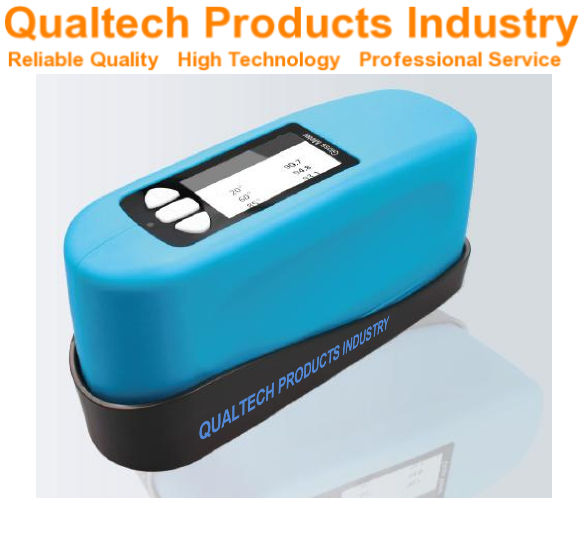
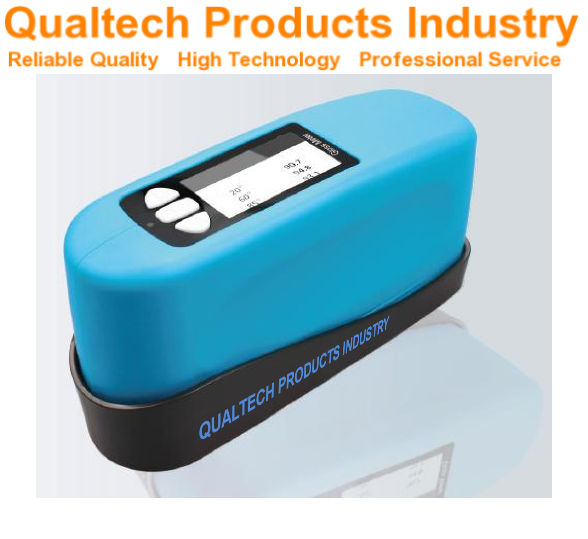
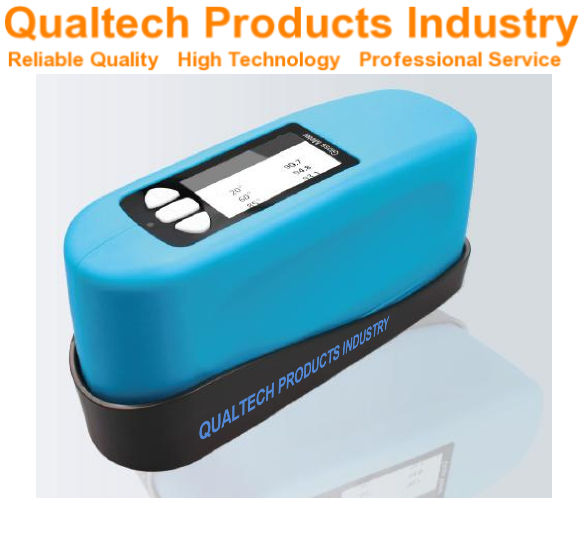
This professional Handheld Glossmeter is an essential Gloss Measurement Device for engineers and scientists across various industries, providing objective and quantifiable measurements of a surface's specular reflectance called gloss. This measurement is crucial for quality control, material characterization and ensuring aesthetic consistencyfor research and quality management.
This Handheld Precision Glossmeters operates by directing a focused beam of light onto a surface at a specific angle and measuring the intensity of the reflected light at the same angle. The measured intensity of the reflected light is then compared to a known standard (usually a highly polished black glass surface) and expressed as a gloss unit (GU).
Key Parameters & Geometry:
Measurement Angles: The angle of incidence and reflectance is critical. Common angles are 20°, 60°, and 85° & 60°: The universal angle used for most surfaces.
20°: Used for high-gloss surfaces, providing greater sensitivity.
85°: Used for low-gloss or matte surfaces, reducing measurement sensitivity.
The specific geometry of the light source, detector, and measurement angle is defined by relevant test standards.
Light Source: Detta Expert Glossmeter offers a calibrated LED Light Source with an exceptional long lifetime and is used to emit a calibrated and stable and consistent light beam.
Detector: The integrated high-precision Photodetector measures the intensity of the reflected light with high accuracy and high precision allowing a Class 1 Glossmeter rating for this Handheld Precision Glossmeter.
Standardized Engineering Applications for Research & Quality Management:
Coatings & Paints: Ensuring consistent gloss levels in paints and coatings for automotive, aerospace, and architectural applications. Monitoring the effects of weathering and aging on coating gloss.
Plastics & Polymers: Controlling the surface finish of plastic components for consumer electronics, automotive interiors, and packaging. Assessing the impact of processing parameters on gloss.
Automotive: Maintaining consistent paint finishes on vehicle exteriors and interiors.
Evaluating the gloss of interior trim components.
Printing & Packaging: Controlling the gloss of printed materials and packaging to enhance visual appeal. Ensuring consistent gloss across different production batches.
Metals: Evaluating the surface finish of polished metal components for decorative and functional applications. Measuring the affects of different metal treatments on the surface.
Ceramics and Stone: Quality control of tile and stone finishes.
Relevant Test Standards:
ISO 2813: Paints and varnishes — Determination of specular gloss of non-metallic paint films at 20 degrees, 60 degrees and 85 degrees:This international standard provides detailed procedures for measuring the specular gloss of non-metallic paint films.
It defines the geometry, calibration, and measurement procedures for glossmeters.
ASTM D523: Standard Test Method for Specular Gloss:This ASTM standard covers the measurement of specular gloss of nonmetallic specimens at 20°, 60°, and 85° geometry.
It is widely used in the United States and provides detailed guidelines for gloss measurement.
ASTM D2457: Standard Test Method for Specular Gloss of Plastic Films and Solid Plastic:This ASTM standard is specifically designed for measuring the specular gloss of plastic films and solid plastic materials. It addresses the unique characteristics of plastic surfaces and provides appropriate measurement procedures.
DIN 67530: Reflection factor; measurement of specular gloss with geometry 20°, 60°, 85°:This German standard is also widely used, and outlines the procedures for measuring specular gloss.
JIS Z 8741: Specular glossiness - Methods of measurement:This Japanese Industrial Standard provides methods for measuring specular gloss.
Engineering Considerations:
Measurement Conditions: Consistent measurement conditions inccluding the temperature and the humidity are important for reliable Gloss Measurements.
Detta Expert Glossmeter är en Class 1 Glossmeter and is engineered in accordance with the relevant test standards for Gloss Measurements to ensure accurate and reliable gloss data for various applications.
Professional Gloss Measurements are performed consistently considering these main steps:
1. Preparation and Calibration:
Ensure the glossmeter's lens and measurement aperture are clean and free from dust, fingerprints or any contaminants. It is suggested to use the included soft, lint-free cloth.
Allow the Handheld Precision Glossmeter to warm up for the recommended time specified by the manufacturer. This ensures the light source and the detector stabilize.
Complete the Automatisk kalibrering with the included Gloss Calibration Tile presenting known gloss values for additional verification. This professinal Glossmeter completes the Tri-Angle Calibration instantly at the touch of a button. The Automatic Tri-Angle Calibration can be repeated and completed any time according to your requirements.
2. Sampe Preparation:
Maintain a consistent ambient temperature and humidity during the sample preparation and the gloss measurements, because the environmental conditions may affect gloss measurements.
Ensure the sample surface is clean and free from dust, fingerprints, scratches or any other contaminants that could affect the gloss reading.
The sample surface should be flat and smooth to ensure accurate measurements. Irregular surfaces can cause variations in reflected light. When measuring samples with uneven or convex or concave surfaces and shape the Handheld Precision Glossmeter QPI-HGM1800 is suggested offering a very small Aperture suitbale for delicate samples.
The sample size should be large enough to completely cover the measurement aperture of the glossmeter. If necessary, condition the sample according to the relevant test standards including temperature stabilization.
3. Measurement Procedure:
Select the appropriate Mätvinkel based on the sample's gloss level and the relevant test standards:
i) 60°: For medium-gloss surfaces (most common).
ii) 20°: For high-gloss surfaces.
iii) 85°: For low-gloss or matte surfaces.
Place this Expert Glossmeter firmly and steadily on the sample surface, ensuring the measurement aperture is fully in contact with the clean and even Sample Surface and avoid any movement or tilting of the glossmeter during measurement.
Take multiple Gloss Measurements at different locations on the sample surface to account for possible variations and record each Gloss Measurement value and repeat the procedure especially when multiple samples are prepared.
4. Gloss Data Analysis and Reporting:
Calculate the Average Gloss Value for each sample by averaging the multiple Gloss Measurements and calculate the Standard Deviation of the Gloss Measurements to assess the variability of the gloss across the samples and report the average gloss value, the standard deviation, the measurement angle and any relevant sample information.
Include the test standard for the specified Gloss Measurement, for example, ISO 2813, ASTM D523, etc..
In addition to the precision Gloss Measurement a visual inspection is suggested. Note any visual observations of the sample surface, such as defects or inconsistencies, that might affect the gloss measurements.

















 Svenska
  English
  Dansk
Dansk  Deutsch
  Ελληνικά
  Español
  Español de México
  Suomi
Suomi  Français
  Français du Canada
  Italiano
  Nederlands
  Português