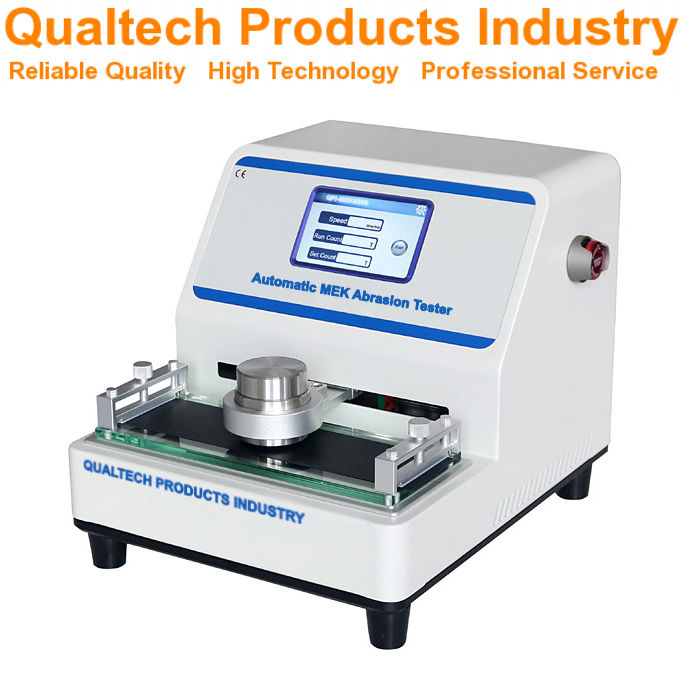
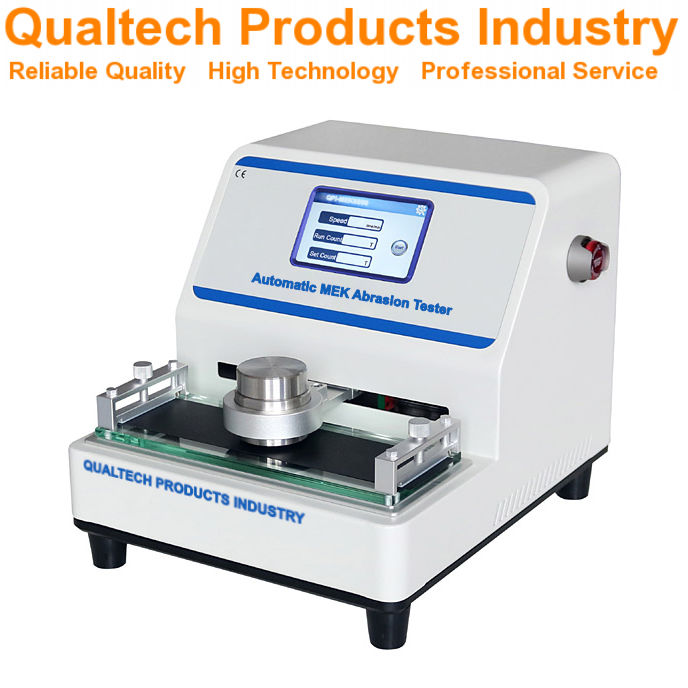
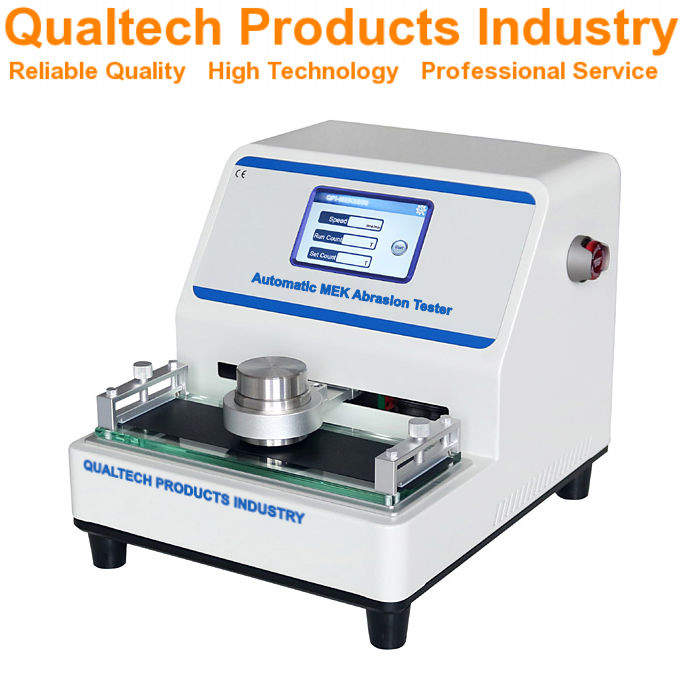
Automatic MEK Solvent Rub Abrasion Tester - Anwendung:
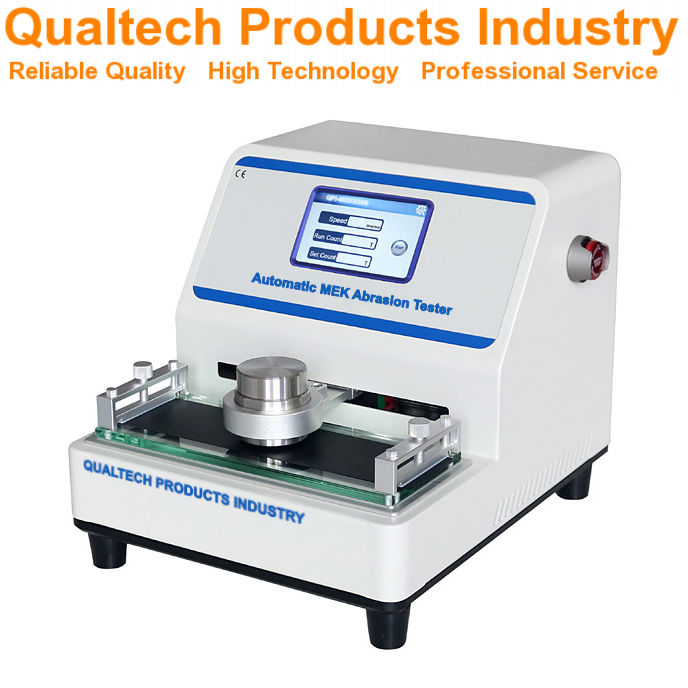
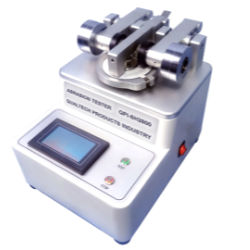
Dies Automatic MEK Rub Abrasion Tester is a critical test instrument used in materials science, particularly within the coatings and surface finishing industries. It provides a standardized and quantifiable method for assessing the solvent resistance and the cure state and durability of organic coatings. This MEK Rub Test is invaluable in both research and development (R&D) and robust quality management (QM) systems.
Automatic MEK Abrasion Tester QPI-MEK6800 applications:
1. Assessment of Coating Cure and Crosslinking Density:
The primary application of this Automatic MEK Rub Abrasion Tester is to evaluate the degree of cure of thermoset organic coatings including epoxies, urethanes, polyesters, alkyds and many more. These coatings undergo chemical changes during the curing process, forming crosslinked networks that become increasingly resistant to solvents.
Mechanism: Methyl Ethyl Ketone (MEK) is a strong solvent that will attack under-cured or improperly crosslinked coatings. A standardized procedure, typically involving rubbing a MEK-saturated cotton cloth or gauze pad over the coated surface under controlled pressure and stroke count, reveals the coating's resistance.
Significance for Engineers/Scientists: The number of 'double rubs', one forward and one backward motion, required to break through or visibly damage the film correlates directly with the extent of crosslinking. A higher rub count indicates a more complete cure, signifying greater chemical resistance, hardness and overall film integrity. This provides a rapid, non-destructive or minimally destructive method to ascertain that the coating has achieved the specified level of cure for optimal service life adhesion and subsequent processing, for example topcoating.
2. Quality Control (QC) in Production Environments:
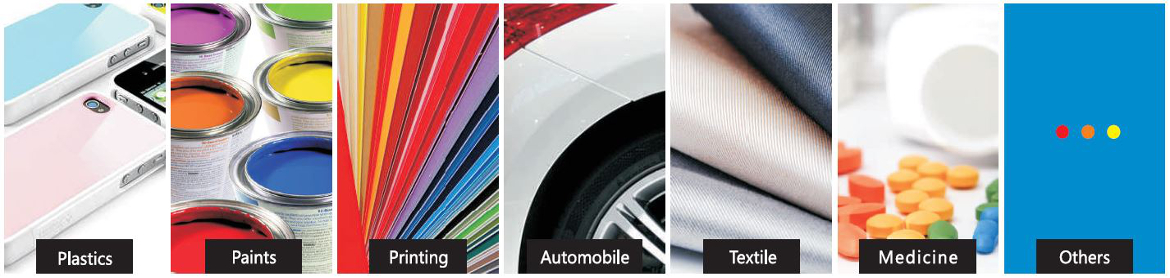
For manufacturing processes involving coated products including automotive, appliance, coil coatings, industrial protective coatings, powder coatings:
Batch Consistency: Dieser Profi MEK Reibtester assists with quick and reliable QC checks to ensure consistency between production batches. Any deviation in raw materials, mixing ratios, application parameters, including film thickness or curing conditions including temperature, humidity and dwell time that leads to under-curing will be revealed by a lower MEK rub resistance.
Process Optimization: Engineers and scientists can use MEK rub test results to fine-tune curing oven temperatures, line speeds or bake cycles, optimizing efficiency while guaranteeing product performance.
Failure Analysis: In cases of premature coating failure, for example, chipping, flaking, poor adhesion in service, this precision Automatischer MEK-Reibtester can be an initial diagnostic tool to determine, if under-curing is a contributing factor.
3. Research and Development (R&D) and Formulation Optimization:
In the laboratory setting, this professional Automatischer MEK-Abriebtester is indispensable for:
New Coating Development: Formulators use this precision MEK Rub Tester to evaluate the effectiveness of different resin systems, curing agents, catalysts and additives on the final cure and solvent resistance. This allows for rapid iteration and optimization of new coating chemistries.
Raw Material Qualification: Assessing the impact of new raw material suppliers or alternative components on coating performance.
Correlation Studies: Establishing correlations between MEK rub resistance and other critical coating properties such as hardness, adhesion, corrosion resistance and long-term durability. This helps in developing predictive models for coating performance.
4. Adherence to Industry Standards:
The application of this precision MEK Rub Abrasion Tester is typically governed by established international standards, ensuring reproducibility and comparability of results across different laboratories and industries.
Key standards include:
ASTM D5402: Standard Practice for Assessing the Solvent Resistance of Organic Coatings Using Solvent Rubs. This is the general standard for organic coatings where the solvent is not always specified but agreed upon.
ASTM D4752: Standard Practice for Measuring MEK Resistance of Ethyl Silicate (Inorganic) Zinc-Rich Primers by Solvent Rub. This standard specifically mandates MEK as the solvent and is crucial for inorganic zinc primers whose cure mechanism is moisture-reactive.
NCCA 11-18 (National Coil Coating Association): A common industry standard often referenced, particularly for coil coatings.
Performing a MEK Rub Test:
Dieser Profi Automatic MEK Rub Abrasion Tester provides a controlled mechanical means to perform the solvent rub test and minimizing operator variability inherent in manual methods.
Key parameters controlled by the automated tester include:
Applied Test Load: Included precision engineered Test Load of 1000g and optional available precision engineered Test Loads of 1500g, 3000g and optional custom engineered Test Loads as per different recognized test standards including ASTM D4752 or D5402). This ensures consistent force is exerted by the rubbing pad.
Stroke Length and Rate: This precision Automatic MEK Abrasion Tester maintains a precise stroke length of 120mm, optional large lengths including 203mm are available and consistent double rub rates including 60 - 70 double rubs per minute can conveniently be preset.
Rubbing Medium: Standardized absorbent cotton cloth or pads are saturated with MEK or other specified solvents and replaced as needed.
Cycle Counting: The automatic Precision Counter tracks the number of double rubs applied and automatically stops when the sample test is completed.
Automated Solvent Dispensing: An optional Automatic Solvent Dispensing System is available to offer controlled solvent flow to the rubbing pads and to minimizing operator exposure and ensuring consistent saturation.
Evaluation: Post-test evaluation involves visual inspection of the rubbed area, typically against an unrubbed control area to assess changes such as:
- Loss of gloss or dulling
- Marring, scratching or softening of the film
- Discoloration or transfer of coating material onto the rubbing pad
- Penetration to the substrate including film breakthrough
The results are reported as the number of double rubs to reach a defined failure point or a specified rating on a scale from 0 - 5 providing quantitative data for engineering analysis and quality assurance documentation.














 Deutsch
  English
  Dansk
Dansk  Ελληνικά
  Español
  Español de México
  Suomi
Suomi  Français
  Français du Canada
  Italiano
  Nederlands
  Svenska
  Português